How often have you heard that you should put butter on a burn? That if you break someone’s ribs during CPR you can be sued? Or that you can’t put a plaster on a child’s cut finger? Some first aid myths are harmless, but others can cost a life. Here are the ones we hear most often on our courses, and what you should do instead.
Myth 1: Put butter on a burn
The fact: Never. Butter holds the heat in and makes the burn worse. Cool it under cool running water for 20 minutes (it still helps up to 3 hours after the burn), then cover loosely with cling film.
Think about what happens to butter when it gets hot: it melts and holds the heat against the skin, making the burn worse. What do firefighters put on a fire? Water, to cool it down.
Cool the burn under cool or lukewarm running water for 20 minutes, or until the pain has gone. Research shows that cooling still helps if the burn happened up to 3 hours ago. Then cover it loosely with cling film and get medical help if needed.
▶ Try it yourself: our free burns 3D simulation
Myth 2: You can’t put a plaster on a child
The fact: You can. The HSE lists this as a health and safety myth. A cut is an open door for infection, so cover it. Use hypoallergenic (low-allergy) plasters to reduce the risk of a reaction.
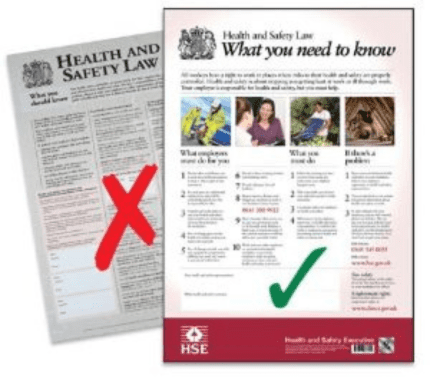
The Health and Safety Executive (HSE) is clear on this: it’s a myth (HSE myth of the month). If there’s a hole in the skin, infection can get in, so cover the hole. Anyone looking after children, such as school staff, has a duty of care to them.
If someone is allergic to plasters, any reaction is on the skin where the adhesive touches it. Best practice is to use hypoallergenic (low-allergy) plasters, which reduce or remove the risk.
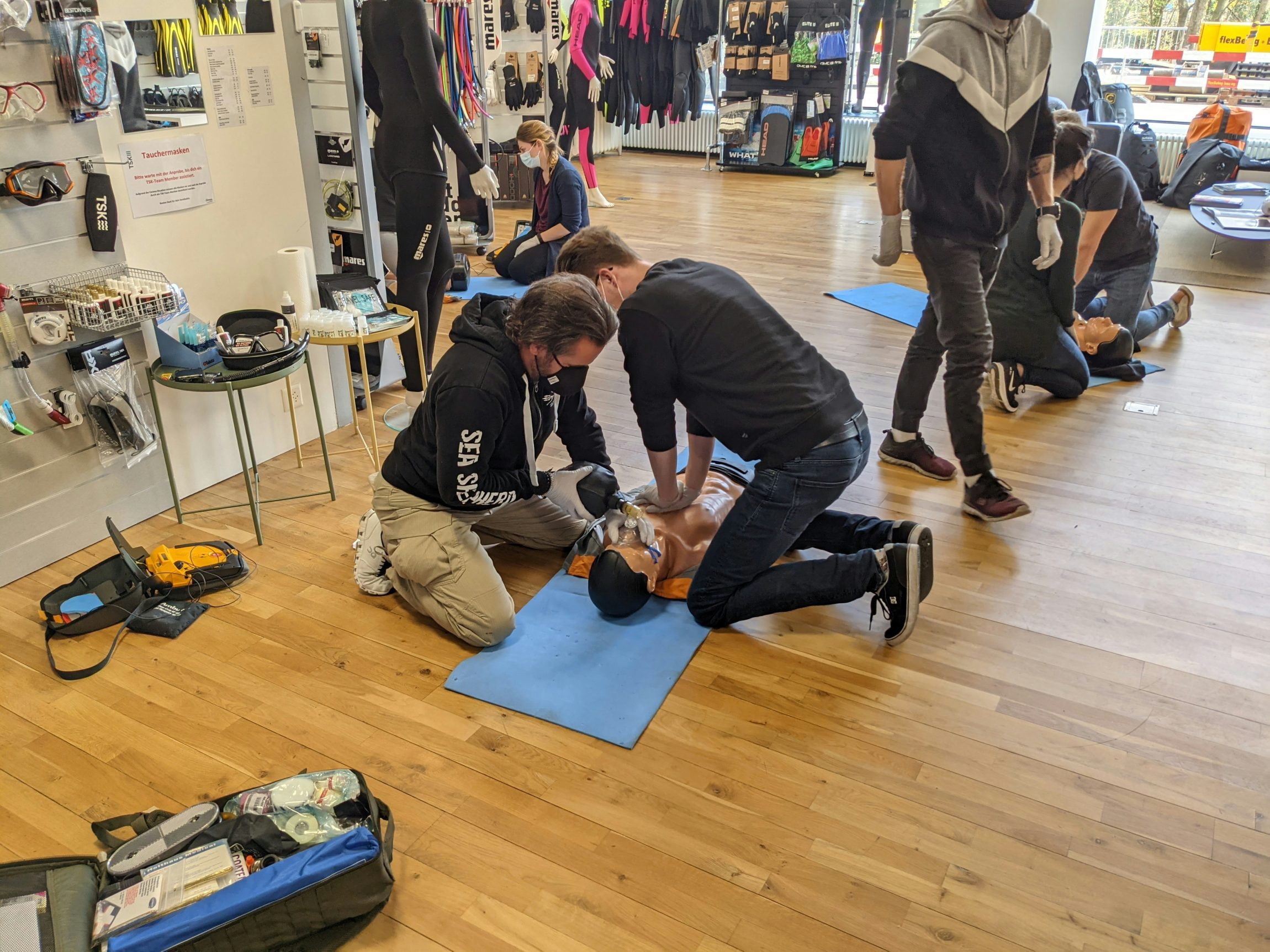
Myth 3: Don’t do CPR in case you break their ribs
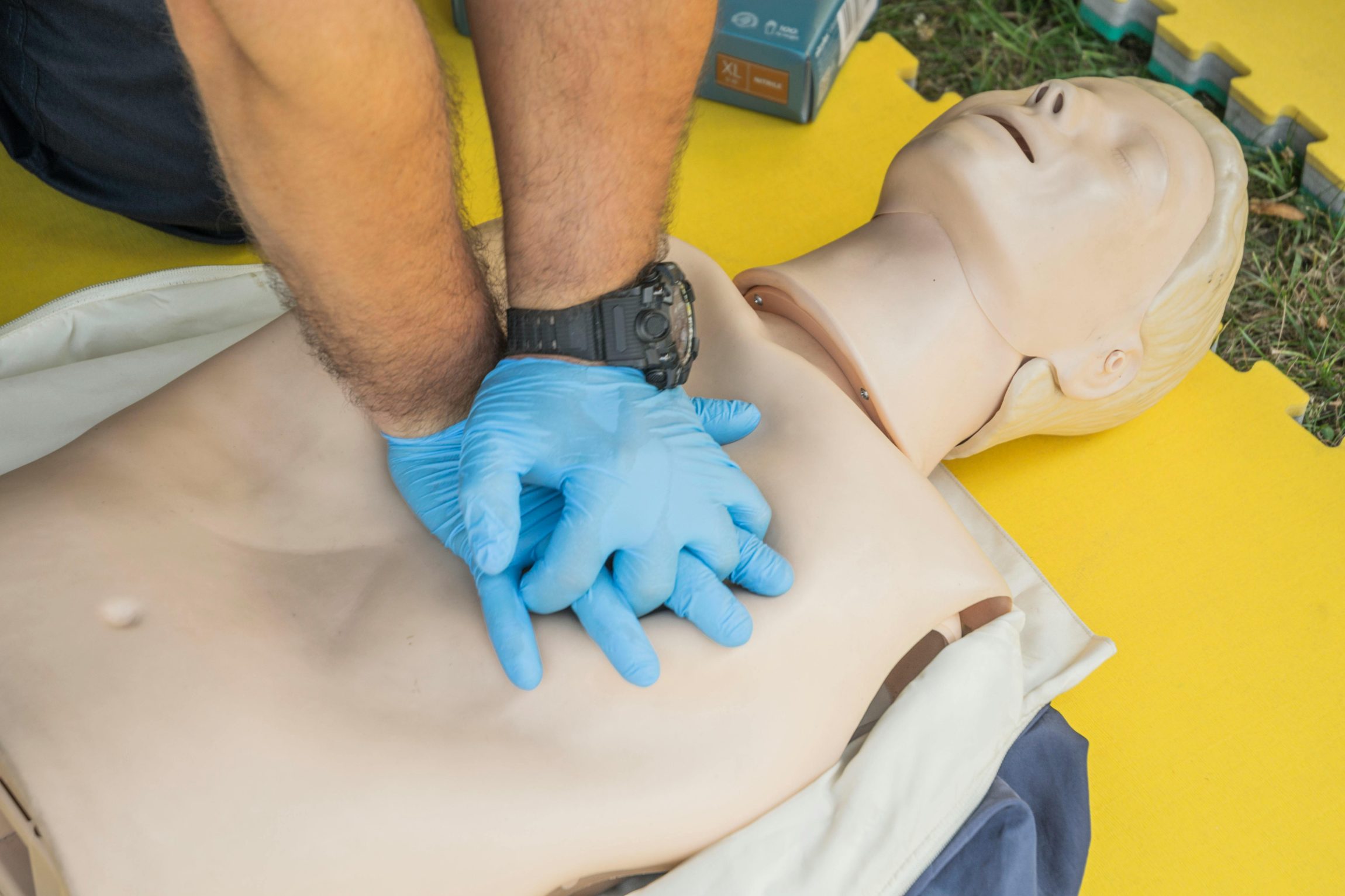
The fact: If someone isn’t breathing and you don’t do CPR, they will die. Ribs (usually the cartilage joining them to the breastbone) heal. Brain damage from lack of oxygen doesn’t.
Ask yourself what happens if you don’t do chest compressions. Without them, the brain is starved of oxygen and brain damage begins within about 3 minutes. Brain damage is permanent; broken ribs heal.
What you feel during compressions is usually the cartilage that joins the ribs to the breastbone. Keep going.
▶ Try it yourself: our free CPR trainer 3D simulation
Myth 4: Never take off a motorcyclist’s helmet
The fact: Leave it on if they’re conscious and breathing. But if they aren’t breathing and you can’t open their airway or give CPR with the helmet on, removing it is essential. The airway comes first.
Leave the helmet on if the rider is conscious and breathing. The Highway Code (rule 283) says don’t remove a motorcyclist’s helmet “unless it is essential and you are trained to do so”.
If they are unconscious and not breathing, or you can’t open and keep open their airway with the helmet on, removing it becomes essential. The brain survives only around 3 minutes without oxygen, and an ambulance can take longer than that to arrive. Our courses show you how to do this safely.
Myth 5: Cough hard if you think you’re having a heart attack
The fact: There’s no evidence ‘cough CPR’ works, and the British Heart Foundation doesn’t recommend it. Call 999 (or 112) straight away.
There is no medical evidence to support ‘cough CPR’, and organisations such as the British Heart Foundation don’t recommend it. If you think you’re having a heart attack, call 999 (or 112) for an ambulance.
Myth 6: A defibrillator could hurt the person
The fact: A defibrillator (AED) checks the heart rhythm itself and will only allow a shock if one is needed. It talks you through every step and is designed to be used by anyone, trained or not.
An Automated External Defibrillator (AED) analyses the heart rhythm and only allows a shock if the person is in a ‘shockable’ rhythm, such as ventricular fibrillation. By then they will be unconscious and not breathing, or not breathing normally (agonal gasps are not normal breathing).
AEDs talk you through what to do at every stage. They’re designed to be used by people with no training at all.
▶ Try it yourself: our free defibrillator (AED) pad placement 3D simulation
Myth 7: Breathe into a paper bag if you’re hyperventilating
The fact: Don’t. It reduces the oxygen they breathe in and can make things worse. Hyperventilation can be caused by injury, blood loss or low oxygen, not just anxiety. Calm them and get them to breathe slowly.
It’s what they do in films, so it must be right? No. Breathing into a bag reduces the oxygen the person takes in, and St John Ambulance advises against it because it can make the condition worse.
Hyperventilation can be caused by anxiety, but also by traumatic injury, severe bleeding or low oxygen levels (hypoxia). Reassure them, encourage slow breathing, and call 999 if you’re unsure of the cause.
▶ Try it yourself: our free hyperventilation 3D simulation
Myth 8: You must give rescue breaths during CPR
The fact: Hands-only CPR is fine if you can’t or don’t want to give rescue breaths. Doing something is always better than doing nothing.
Rescue breaths are preferable if you’re trained and willing. But if you can’t or don’t want to give them (facial injuries, blood or vomit, or any other reason), chest-compression-only CPR is acceptable. During the Covid pandemic, hands-only CPR was advised to reduce the risk of infection.
The worst thing you can do is nothing.
▶ Try it yourself: our free CPR trainer 3D simulation
Myth 9: It doesn’t matter which side you roll someone onto
The fact: Roll them onto the injured side. It limits movement of a broken bone, puts pressure on a bleeding wound, and with a chest wound it protects the good lung.
One thing to remember: the casualty goes onto the injured side.
Broken bone: rolling onto the injured side minimises movement of the bone. Bleeding wound: it helps put pressure on the wound. Penetrating chest wound (with the object left in place): it may seem counter-intuitive, but rolling onto the injured side stops blood from the injured lung flowing into the good lung, so the casualty can keep breathing through it (First Aid Manual, 11th edition, penetrating chest wounds).
▶ Try it yourself: our free recovery position 3D simulation
Myth 10: Tilt your head back for a nosebleed
The fact: Sit up and lean forward, then pinch the soft part of the nose for 10 minutes. Leaning back sends blood down the throat into the stomach, which usually ends in vomit.
Pinch the soft part of the nose to put pressure on the bleed, as you would for any bleed. Because this blocks part of the airway, sit them up and lean them forward, just as you would for asthma, anaphylaxis or choking.
Leaning forward stops blood running down the back of the throat into the stomach. The stomach doesn’t like blood, so the result is usually vomit (pavement pizza), quite possibly over you. Keep the pressure on for 10 to 15 minutes. If it’s still bleeding after that, go to A&E.
▶ Try it yourself: our free nosebleed 3D simulation
Myth 11: Make someone sick if they’ve swallowed poison
The fact: Don’t. If it’s corrosive it burns on the way down and again on the way back up. Call 999 or 111, keep a sample of what they took, and follow the product’s safety instructions.
If the substance is corrosive, it burned them on the way down and will burn them again on the way back up. Keep it in the stomach so they can be treated properly in hospital.
If they’re sick naturally, keep a sample to go with them, along with the container or a sample of what they swallowed (chemical or plant). Chemical containers should carry safety (COSHH) information: follow it while you wait for the ambulance. And wear your gloves!
▶ Try it yourself: our free poisoning 3D simulation
Myth 12: If you get it wrong, you’ll be sued
The fact: The Social Action, Responsibility and Heroism Act 2015 protects people who act to help in an emergency. Courts ask what a reasonable person would have done, and doing nothing is the worst option.
Imagine you do CPR, break some ribs and save someone’s life, and they then try to sue you. A judge would point out that without your CPR they wouldn’t be there to sue anyone.
Courts look at what a reasonable person would do, trained or not, and the Social Action, Responsibility and Heroism Act 2015 (SARAH Act) protects people acting heroically in an emergency. We’re not aware of any successful claim in the UK against someone giving first aid in good faith.
Myth 13: Give a casualty a drink of water
The fact: Nil by mouth. Someone in shock diverts blood away from the stomach, so food or drink often comes straight back up. The exception: something sugary for a diabetic having a ‘hypo’.
When someone is in shock, the body diverts blood to the brain, heart and lungs, which is why their skin goes pale, cold and clammy. The stomach can’t digest anything without a blood supply, so food or drink usually comes straight back up.
Remember the 5 F’s of nil by mouth: no Food; no Fluids (except something sugary, like jelly babies, for a diabetic having a low blood sugar ‘hypo’); no Fingers in the mouth (you could be bitten or push a blockage further down); no Foreign objects (never put anything in someone’s mouth during a seizure); and no Fags (smoking reduces the body’s ability to absorb oxygen).
▶ Try it yourself: our free severe bleeding and shock 3D simulation
Myth 14: Put something in their mouth during a seizure
The fact: Never. They won’t swallow their tongue. Putting objects or fingers in their mouth can break teeth, block the airway or get you bitten. Protect their head, time the seizure and move hazards away.
It used to be said that you should put a wallet or a wooden spoon in someone’s mouth during a seizure to stop them biting their tongue. Don’t. If they bite their tongue, it can be dealt with once the seizure stops. Objects and fingers in the mouth can block the airway, break teeth or get you bitten.
Protect their head, move hazards away, time the seizure, and call 999 if it lasts more than 5 minutes, it’s their first seizure, or they’re injured.
▶ Try it yourself: our free seizures 3D simulation
Myth 15: You shouldn’t give CPR to a woman in case you touch her breasts
The fact: If she’s not breathing normally, start CPR straight away. Hesitating costs lives: without CPR and a defibrillator, the chance of survival falls by around 10% for every minute that passes.
Around a third of people in the UK say they’d be afraid to give CPR to a woman because they’re worried about touching her chest or being accused of inappropriate touching (St John Ambulance survey, 2024). Research also shows women who collapse in public are less likely than men to receive CPR from a bystander.
Compressions go in the centre of the chest, on the breastbone, whoever the casualty is. If you’re using a defibrillator, a bra can be moved or cut so the pads go on bare skin. Don’t worry about exposing the chest: saving her life comes first.
▶ Try it yourself: our free defibrillator (AED) pad placement 3D simulation
The magic numbers: 3 and 10
3 and 10 come up again and again in first aid. Remember them and you’ll remember a lot.
- 3 minutes without oxygen and the brain starts to die. Brain damage is permanent, so getting oxygen to the brain is always the priority. (As a rough rule, we can survive about 3 weeks without food, 3 days without water and 3 minutes without oxygen.)
- Check for normal breathing for no more than 10 seconds.
- CPR is 30 chest compressions (3 × 10) followed by 2 rescue breaths.
- Choking: up to 5 back blows, then up to 5 abdominal thrusts (5 + 5 = 10). If it’s still blocked after 3 cycles, call 999 or 112 and keep going.
- Nosebleed: lean forward and pinch the soft part of the nose for 10 to 15 minutes. If it’s still bleeding after that, go to A&E.
- Suspected heart attack: if they’re not allergic and are over 16, give one 300mg aspirin to chew slowly (3 × 10 × 10).
- Burns: assess the area with the rule of nines (3 × 3). Each arm is 9%, the head 9%, the front of the torso 18%, the back 18%, each leg 18% and the groin 1%.
- Anaphylaxis: help them use their adrenaline auto-injector. If there’s no improvement after 5 minutes, use the second one.
- Asthma attack: help them use their own reliever inhaler, with a spacer if one is available (Resuscitation Council UK). Asthma + Lung UK advises one puff of a blue reliever every 30 to 60 seconds, up to 10 puffs. Call 999 if they don’t improve.
- Burns: cool under running water for 20 minutes (2 × 10), and cooling still helps up to 3 hours after the burn.
- Workplace first aid certificates are valid for 3 years.
- The Glasgow Coma Scale runs from 15 (fully alert) down to 3 (deeply unconscious).
- Pain is scored out of 10.
- For every minute without CPR and defibrillation, the chance of survival falls by around 10%. Defibrillation within 3 to 5 minutes of collapse can give survival rates as high as 50 to 70%.
The worst thing you can do is nothing
People often worry about making things worse. In an emergency, prioritise the four B’s in order: Breathing (if they’re not breathing, start CPR), Bleeding (stop the leak), Burns (cool them) and Bones (support them in the position you find them). Even if all you do is dial 999 or 112, the call handler will talk you through what to do.
Want to practise? Our free 3D training simulations let you try CPR, the recovery position, a defibrillator and 29 other skills on your phone or computer.
Got a question about these or any other first aid myth? Email enquiries@passionfirstaid.co.uk or book a course and learn it properly, hands on.